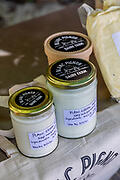
ONE of the oldest established family dairy farms in the Island, Blanc Pignon at La Haule, has closed down. It has ceasing dairying and ceased the production of all its dairy and meat products.
The decision to do so has been taken after much painful deliberation, according to the two directors of the farming company, Alice Le Cras and her sister, Caroline Leng.
The dairy herd has been was successfully rehomed last Friday and all of the dairy animals have been placed with existing dairy herds within Jersey, ensuring continuity of care in familiar agricultural environments.
The rehoming has been carried out with the support and cooperation of members of the local dairy farming community, and the owners have expressed their grateful appreciation for the practical assistance and collegial spirit shown by other dairy farmers and partners.
the welfare of the animals has been the first priority throughout the closure process, and the arrangements have been made to ensure that.
A number of beef cattle remain on the farm. Arrangements are being made for these animals as part of the ongoing and orderly wind-down of operations.
The closure of Blanc Pignon Farm is being managed in stages to ensure that livestock, staff, customers, and regulatory requirements are all dealt with responsibly and in a considered manner. The owners have also been mindful of the impact on employees and the inevitable redundancies that follow the closure of the business.
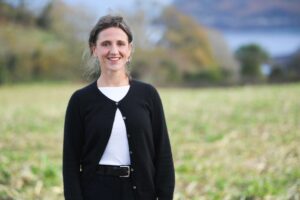
Alice Le Cras, one of the two farm directors, said: ‘At one time, Blanc Pignon Farm was one of the biggest herds in Jersey, now it is one of the smallest. We have only 51 milkers, plus youngstock.
‘We have remained small and become really a boutique operation, and we have had a real go at diversification. We love our farm, but I think what is really important to remember about dairy farming is that you need to have big, very up-to-date, facilities, and need frequently to invest and re-invest. The industry is constantly evolving, and that is really exciting. We have become too small, and as the industry continues to change. It is no longer suitable for us to continue dairying.’
The lack of space in the farm was a further consideration, as it inhibited any major expansion of the herd.
‘As the Island and our own home area becomes increasingly developed, we are farming in an increasingly small patch – almost a townscape. It is virtually impossible to be financially relevant in this situation.’
The present milking parlour and other facilities on the farm were built in 1967, and although there have been some improvements and innovations since then, the overall facilities have remained much the same as they were at the time when Blanc Pignon was one of the most modern and progressive farms in Jersey. Nowadays, these are no longer relevant to the modern dairy industry.
She acknowledged that new finance for agriculture was being made available by Government, but said: ‘That is exciting, but to take advantage of that, there has to be innovation, and evolution, and scaling up so as to go forwards. Where we are at, we are not in a position to do that.
‘You really need to reinvest every 15 years or so, but in order to justify that investment, you really need to be making returns that merit it.
‘We can’t expand the farm, and so we can’t make it work. We’re just too small. There have been a lot of tears and although we are deeply upset, we have made this measured and difficult decision in the light of present circumstances.’
At one time, cattle from Blanc Pignon were exported all over the world. The mother of the two sisters, Vera Le Cras, was well-known for her passion for her herd and for dairy farming in Jersey
The farm has been part of Jersey’s agricultural landscape for many years, and its closure marks the end of an era. The owners remain grateful to those who have supported the farm over that time, including staff, customers, and others in the dairy farming community.
‘They have fought very hard for the industry to survive,’ Alice said, and although we are shutting, we will still be very involved in the industry. Jersey without its cows would not be Jersey. It would be a very sad place.’
2 Responses
These people had a chance to be good people and get paid to send the 51 cows and calves to a sanctuary but instead chose to send them to other dairy farms where they will be abused and then slaughtered. Shameful
I am both disappointed and angry. Those cows could have gone into a rescue where they could live out their lives happily and not have to produce another calf every year only to have it taken away. So those poor cows will continue in a life of slavery, and then go to the slaughterhouse as a vote of thanks!!!
Absolutely disgraceful.