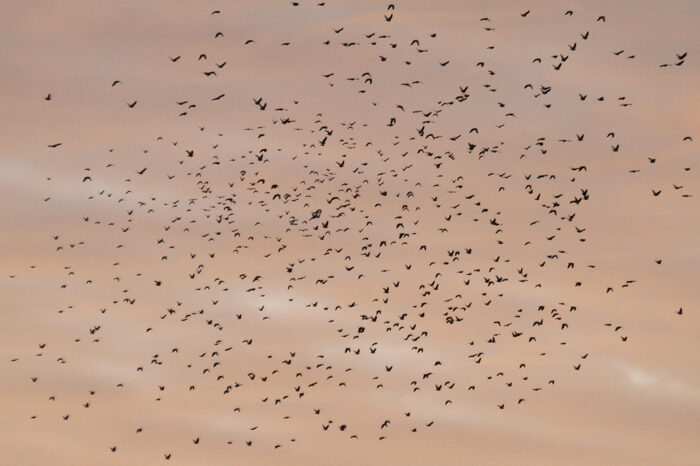
Unless you’re a birder in one of the Société Jersiaise’s Facebook groups, you may be unaware of something truly remarkable that has been happening in the past few weeks. And if you’re anything like me, it will blow you mind.
Each morning, Mick Dryden of the Société’s ornithology section can be found at Noirmont Point counting birds – and at this time of year it is flocks of wood pigeons that he is particularly interested in.
So, how many wood pigeons do you think Mick has counted between 20 October and 15 November?
I asked my family over dinner this week and they were as astonished as I was.
The answer is an incredible 225,235. But that’s not all. Another member of the ornithology section, Romano da Costa, is counting at Victoria Tower, above Gorey. He has recorded 185,502, making a grand total of 410,737. The highest number for a single day at Noirmont was 81,000. There can be 10,000 in a single flock.
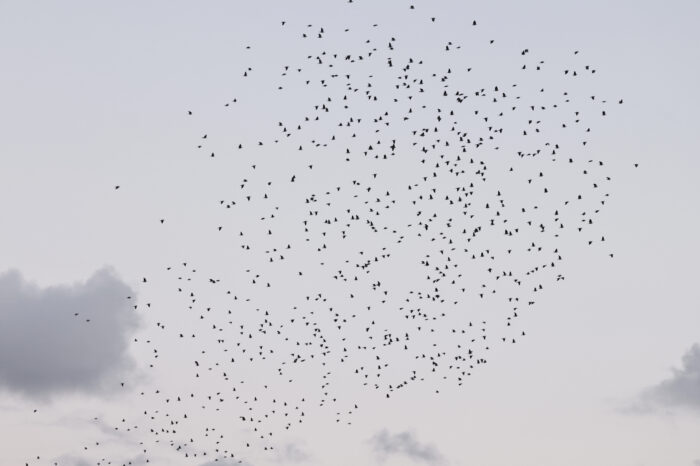
It has been a record year for wood pigeons, although it is not known exactly why the numbers have increased.
‘It happens every year at this time of the year,’ Mick said. ‘We presume that they come down from Scandinavia because they need to leave there for the winter. They are heading south, to Iberia and north Africa.
‘It’s a very limited passage. They start in the second half of October and finish about now, in mid-November. It lasts for about a month. We may get a few more if the weather improves.’
Some of the wood pigeons from the Island migrate south, while others stay here over the winter.
Mick explained that Noirmont was a good place to count because it was one of the most southerly points, and the birds liked to stay over land for as long as possible.
Mick said: ‘Romano gets big numbers as well. He tends to get different species of birds. Generally speaking, he gets fewer wood pigeons and many more thrushes, for example. We also get redwings and fieldfares from Scandinavia.’
He added: ‘The birds mainly fly over in the morning after resting in the Island overnight.’
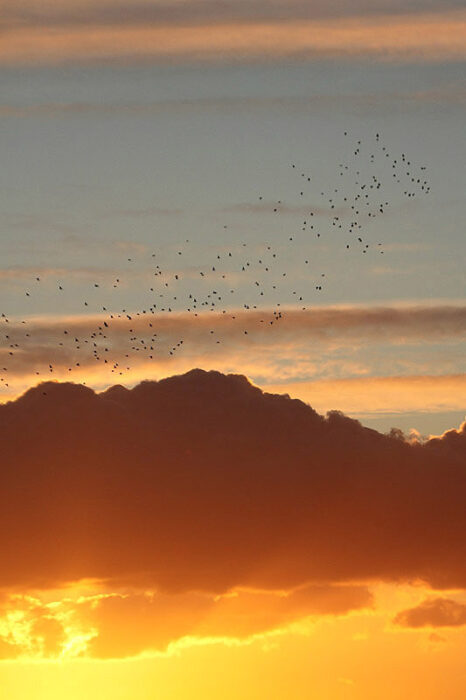
It is not clear what they eat, but they like berries, especially those which grow on ivy in Jersey. The wood pigeons do not have to eat every day as they migrate, however.
Mick said that huge flocks of pigeons used to be seen in North America. The passenger pigeon, he said, was once the most numerous bird in the world. There were estimated to be up to five billion and the flocks could be seven miles wide.
‘Not long after human settlers arrived, they wiped them all out,’ he explained. ‘They just shot them out of the sky. The very last one end up in a zoo in a Cincinnati.’
The female named Martha died on 1 September 1914, aged almost 30.
Mick has been counting birds for a long time.
‘You get to know what a flock of 10, 50 or 100 looks like. I take pictures of a particular flock and write down my estimate. I then count them on the photo when I get back home.’
His margin of error is around five per cent.
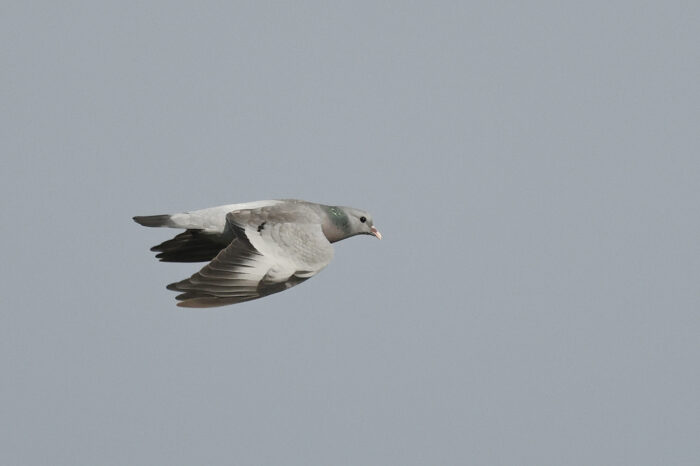
The wood pigeons fly over with stock doves, which are slightly smaller – about 80 per cent of the size.
‘This year we’ve been seeing large flocks of stock doves, which is not something that we have witnessed before.’
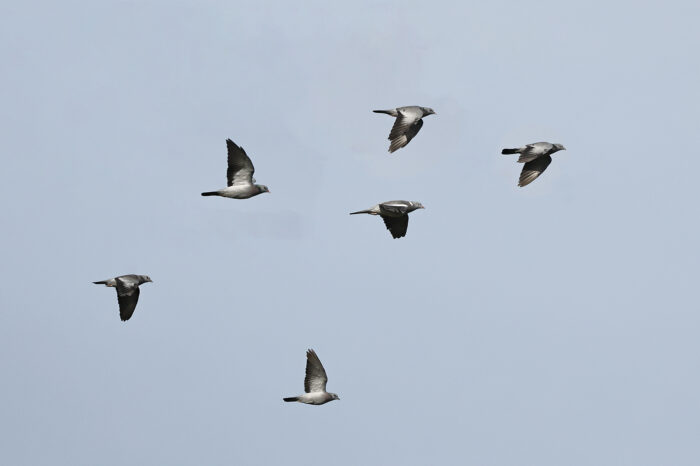
Mick has counted 4,933 stock doves at Noirmont, while Romano’s tally at Victoria tower is 7,661, making a grand total of 12,594.
‘Again this will be our record total since counts began, by some margin,’ he said. ‘There can be huge differences between the numbers and species of birds recorded in different parts of the Island.’
Each morning, it is not just the wood pigeons and stock doves which are flying over Noirmont. They are greeted by a pair of peregrine falcons, one of six breeding pairs which live in Jersey and patrol Island skies.
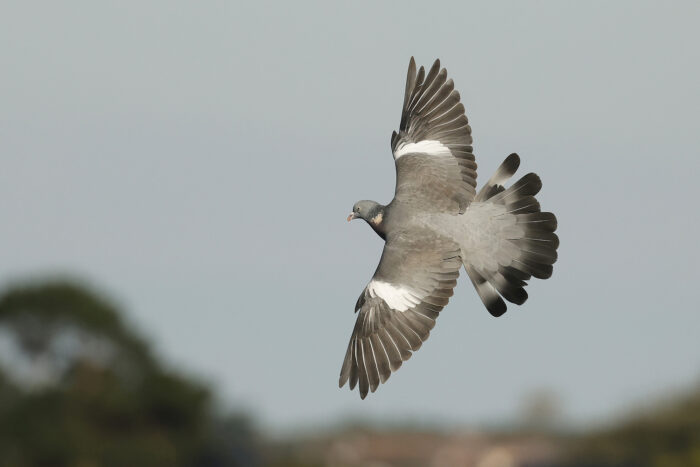
Mick explained that wood pigeons were generally too big for male peregrines, which are smaller than the females. While the females might well have a wood pigeon for breakfast, the males are more likely to target the smaller stock doves.
So go on, ask your family how many wood pigeons they think have overnighted in Jersey on their way south in the past four or so weeks. And prepare to blow their minds.