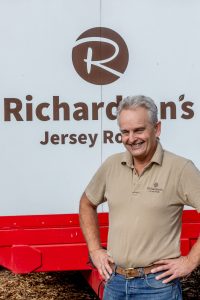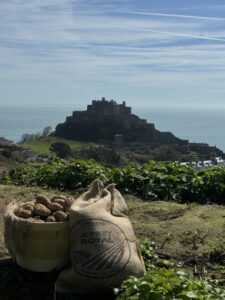
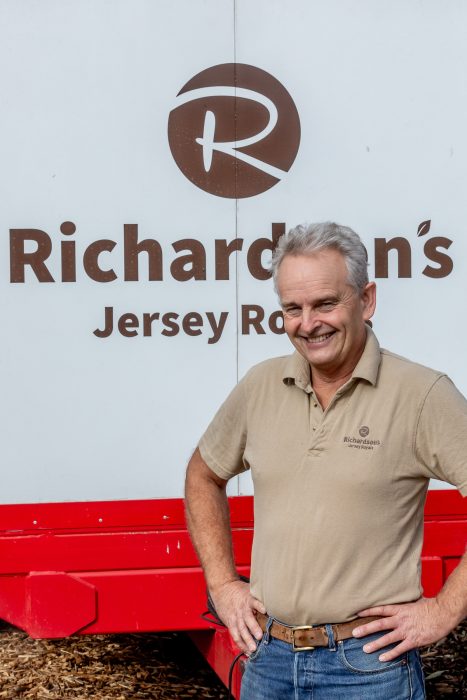
“Jersey farming has a future worth investing in, not simply because of what it has meant to our island, but because of what it can contribute next,” an upbeat Dougie Richardson told this year’s Jersey Farming Conference.
The president of the Jersey Farmers Union delivered his speech to members of the farming community, government ministers, civil servants and others at the event at La Mare Wine Estate on 5 November.
His positive tone reflected the mood of the conference, which emphasised the importance of collaboration and partnership, both within the farming community and with government.
Asked to comment on the current relationship with government, he said: “It’s never been better. It’s in a very good place. We have the structures all coming together to form a collaborative unity that is going to see us move forward with much progress.”
Over the past seven years, annual government support for farming has increased from £1 million to £10 million.
The positive partnership sentiment was echoed by the Minister for Environment, Agriculture and Fisheries, Senator Mary Le Hegarat, who said that government should work with farmers, landowners and fishers, and not simply regulate them.
“The government will continue to work with you, listen to you, and recognise the vital role that agriculture plays in Jersey’s economy, environment, and identity,” she said.
“We will continue supporting practical measures that help businesses adapt, including improved water management, efficient irrigation systems, and long-term planning for drought resilience.”
Mr Richardson stressed that farming had to be inclusive, saying that the union was open to smallholders as well as larger-scale growers.
“Our differences should give us complementary strengths, not reasons to remain apart,” he told the conference, adding: “We should be ambitious but specific, collaborative but accountable. Proud of our inheritance but willing to change.”
He said that the plan for the future should include a food resilience plan, farmer-led agri-tech trials, greater co-operation across sectors, a keen focus on building skills and career pathways and the establishment of a multi-year government partnership.
“My vision is of an agricultural sector that is a vibrant part of Jersey’s economy, productive, commercially ambitious, and valued by the community it serves,” he said, adding: “I want those entering agriculture today to see an industry with purpose, opportunity, and confidence, producing outstanding food, creating value for Jersey, and caring for the Island that sustains us.”
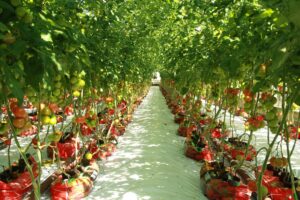
He called on farmers to embrace new technology, not because it was new but because it worked, saying that they should approach change with three questions – Does it improve the business? Does it help people? Does it protect or improve the environment?
Other speakers at the conference, which was organised by the Farm Jersey team headed up by John Garton, included the Assistant Minister for Environment, Agriculture and Fisheries, Deputy Kirsten Morel; head of water quality at sponsors Jersey Water Jeanette Sheldon; Anna Woodley, managing director of Trinity Agtech; Michael Kavanagh, of The Green Farm Collective; and Toby Gladwin, the civil servant in charge of rural and marine.
In addition to Jersey Water, the conference was sponsored by Normans and Hepburns insurance brokers.