A different view of Jersey’s Occupation. By Sarah Grigson
(This was the winning book in this month’s ‘Inspired by Jersey’ literary awards, organised by RURAL magazine, spnopred by BCRLaw, which took plave at Tne Harbouur Gallery.}
A pigeon might seem an unlikely object through which to tell the story of Jersey’s Occupation, yet these birds played a surprising role. Fearing they might be used to send secret messages to Britain, the occupying German forces banned Islanders from keeping pigeons and ordered all carrier pigeons to be destroyed.
Meanwhile, the British were parachuting homing pigeons into occupied Europe in the hope of gathering intelligence from resistance groups. A few reached Jersey, but it was a pigeon that landed in Normandy that led to the execution of a Frenchman, Louis Berrier. Posters announcing his death by firing squad appeared across Jersey, a stark warning of the consequences of communicating with Britain.
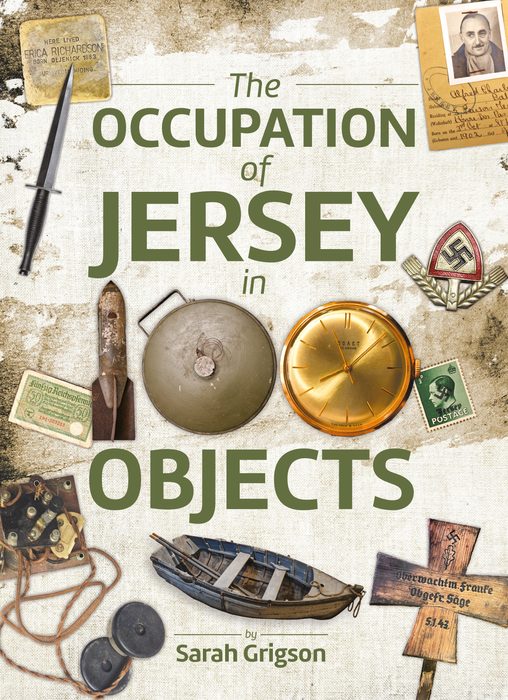
The pigeon is one of the more unusual entries in The Occupation of Jersey in 100 Objects, a new book that explores the Island’s wartime history through physical artefacts, uncovering lesser-known stories from those turbulent five years.
Among them is a rough woollen cap worn by an enslaved Russian airman, forced to labour in quarries in the west of the Island. Subjected to regular beatings and surrounded by sickness, he eventually escaped and was sheltered by a succession of brave Islanders for the remainder of the Occupation.
Then there’s a doll’s house, lovingly crafted from wooden packing cases and complete with miniature furniture. Made for a child when shop shelves were bare and toys almost impossible to buy, it was the work of a man whose meagre rations were supplemented by food provided by the child’s parents.
Another object is a German Christmas card, written by a lonely soldier to his family back home. It never reached its destination. Along with nearly a hundred other letters, it was intercepted when local youths stole a postbag, determined to strike back against those who had occupied their Island and taken away their freedom.
Through objects such as these, the book explores the experiences of Islanders, their occupiers and those who found themselves in Jersey through circumstances beyond their control. Together, they reveal the personal stories and unexpected details that conventional histories sometimes overlook, offering a fresh perspective on a period we think we know so well.
The Occupation of Jersey in 100 Objects is available from Jersey War Tunnels, Jersey Heritage, Société Jersiaise, the Harbour Gallery and other outlets.