ACCESS to the countryside – it is a theme that emerges regularly in Jersey, just as it does, writ large, in the UK.
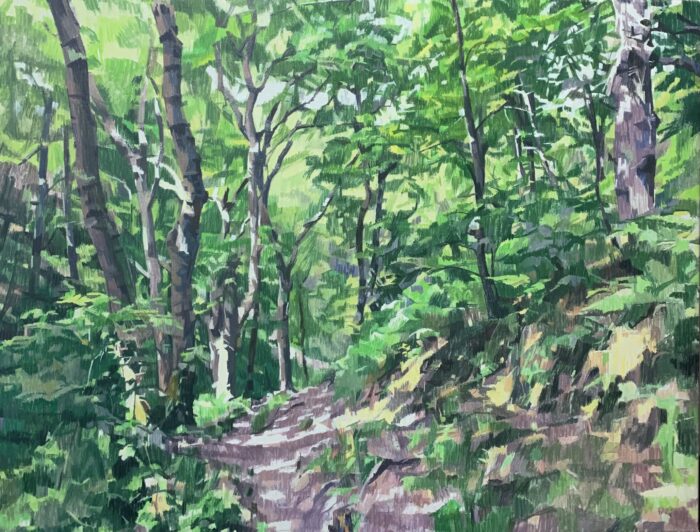
Lucky are those Islanders who, through land ownership, or with the permission of a friendly landowner or farmer, can remove themselves from the roads and make use of private property to stroll, to enjoy riding a horse, walk a dog, or go mountain biking far from the madding crowd. There are areas of the Island that are still so secluded, that it would be possible to imagine that one was not living in a small island, but in the depths of the English countryside.
But they are not easily accessible.
The fact is, however, that it is becoming increasingly difficult to find a quiet spot in the countryside for private enjoyment. The Island’s population has increased in the last 40 years and people’s recreational pursuits have changed and become more diverse. There are only so many paths that can exist in this small Island, so think ‘multi-user paths’ as opposed to bridleways, footpaths, or biking paths.
The relationship between the owners of the land with public paths is a fragile one. ‘Private property’ should always mean ‘property that is private’, and there have been three instances in the last year or so where inconsiderate users have prompted landowners to threaten to stop access and negotiations have taken place to keep them open. It is perhaps not generally known how much we rely on the generosity of landowners in just maintaining the existing paths. It is also very difficult to create new paths.
It is fair to say that horses and bikes cause the most damage to the paths, particularly sensitive areas like the dunes. There are thousands of walkers and probably thousands of cyclists but there are believed to be less than 1,000 horses in Jersey; a recent estimate is only about 600 or so. Should we be expending so much effort to benefit such a minority leisure pursuit?
Nevertheless, the benefits of riding are many and the connection between a horse and rider develops a person’s abilities to have empathy and compassion for another being, as well as boosting their resilience to cope with adverse situations (including dealing with fear and frustration) as well as becoming more courageous. These are all skills that will help them in their human relationships. Riding in nature can also encourage people to appreciate it and respect it and therefore develop a lifelong desire to protect the environment.
Over the last 40 years, off-road riding has diminished, which is not good for either horses or riders. Horse riders are right to be fearful of hacking on the Island’s busy roads, where the amount of traffic has increased dramatically, and where there are too many inconsiderate car drivers, and equally inconsiderate cyclists who are just as capable of spooking horses. The answer too often, is to limit riding to arenas, which is not conducive to equine wellbeing, physical or mental, or for developing riders’ skills.
Those whose experience of hacking or walking around the Island extends over any length of time are all too aware of how many former bridleways and footpaths have been closed off.
A constant plea has been to have a joined-up network of off-road bridle paths and footpaths, which could be linked with Green Lanes, and which could indeed provide access to the countryside for Islanders, including those with mobility issues. Such a network could also create extra opportunities to promote tourism.
A good start was the publication in 2016 of Countryside Access for Jersey by the Environment Department, which led to the creation of a digital map showing all known permitted footpaths, bridle paths, cycle tracks and Green Lanes. There have been other success stories, such as the opening of new multi-user paths that open up the countryside without impacting on local biodiversity and wildlife. Jersey’s historic chemins could well be rediscovered and reopened – a hard and complicated job, especially as some of these paths now go through people’s gardens.
Landowners need to be aware of the payment from the Rural Resource Scheme of £2.50 per linear metre to provide public access around fields and field tracks.
Beaches are another resource for exercise and recreation, and as has been often mooted, there would be considerable advantages of having at least one unrestricted beach available for horses and dogs throughout the year; this would stagger the times when horses and dogs use it, so it would be less busy and safer for all.
All too often we promote the idea of ‘Beautiful Jersey’, but it would be good to allow more people actually to experience the hidden beauty of Jersey’s countryside.