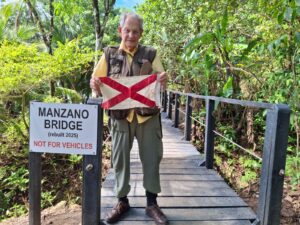
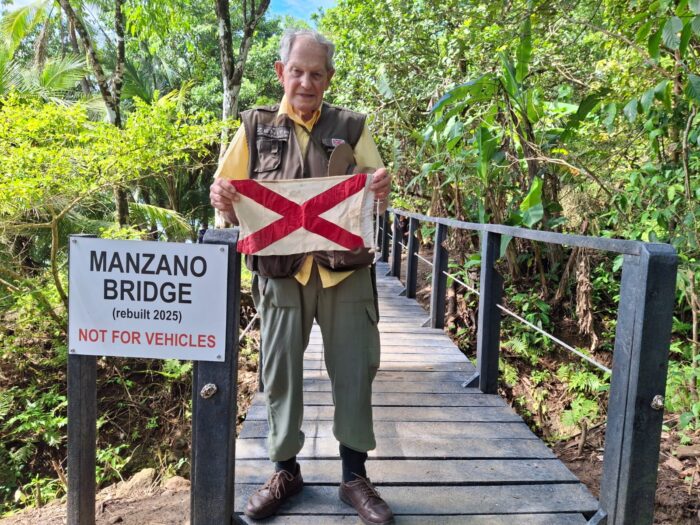
John Blashford Snell promises a visit to the ‘Garden of Eden’duting his talk at the Jersey Arts Centre on 6 November , as describes the beauty of Coasta Roca’s national park.
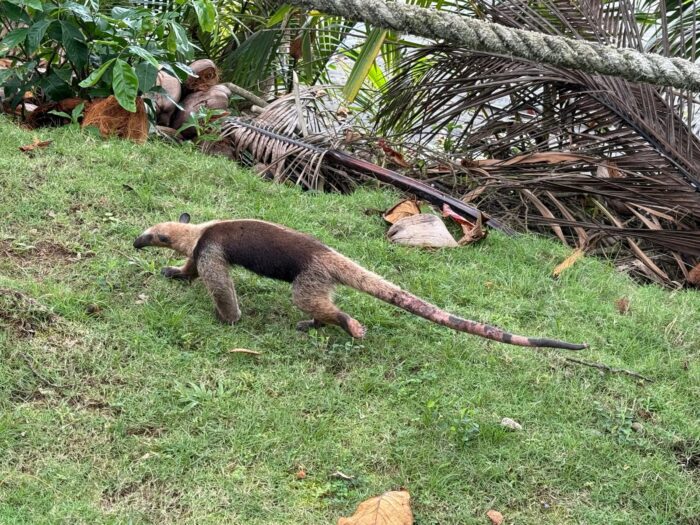
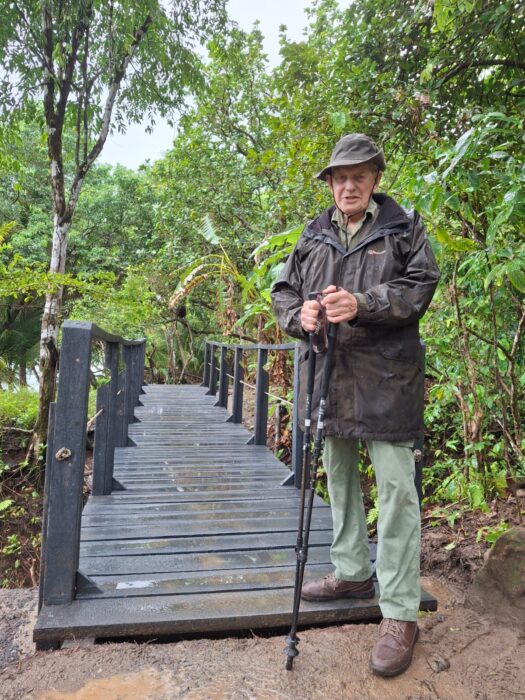
He led a 15-strong team, who built a bridge using planks of recycled plastic, into the Corcovado, a protected reserve od Central America, while being surrounded by surprisingly tame animals, including a puma.
Hosted by the Jersey Scientific Exploration Society, John will share films and slide showing how the teamhelped the local community, surveyed trails and catalogued wildlife for a guidebook.
His expeditions over the last 50 years have prompted many young people to embark on adventures on their own,
Islander Eloise Rouault was one of those to e so inspired and, having been awarded a £1,500 bursary from the JSES, she spent five weeks in South Africa recently on a trip organised by Raleigh International. Elise will be sharing her experiences alongside John at 7pm on 6 November.
Tickets from the Jersey Arts Centre are £12.50 for adults and £5 for students under 18.
John describes his visit to Costa Rican this article, reprinted from RURAL magazine:
A VISIT TO A GARDEN OF EDEN
By Jersey’s eminent explorer, Colonel John Blashford-Snell CBE
Last year I carried the Jersey flag to the Pacific coast of Costa Rica, where the emerald green rainforest meets the deep blue ocean on the Osa peninsula. This is dominated by the Corcovado, largest of the country’s national parks and a crown jewel in the protected reserves of Central America.
Of all the wild areas I have seen worldwide, this assembly of pristine beaches, tumbling waterfalls and mangrove swamps, alive with wildlife, is unsurpassed.
My first visit was in 1979 when during Operation Drake we erected a memorial cairn in memory of Sir Francis Drake’s arrival 400 years before. Then in 2015, the Scientific Exploration Society was asked by the Costa Rican park department to build a 10-metre footbridge, crossing a ravine and leading into the Corcovado reserve. The bridge was built and lasted for 10 years but by 2025 the timber decking had rotted, and the structure needed urgent repairs.
Thus, with the support of Pioneer Expeditions of Dorchester and the backing of the Scientific Exploration Society, a 15-strong team set out to rebuild the bridge and also carry out community aid tasks to help the indigenous Ngabe people. Other tasks included surveying trails in the tropical forest and cataloguing the wildlife to provide a simple guidebook for the area.
Following the examples of work carried out on the Flipflopi project in Kenya using recycled plastic, it was decided to rebuild the bridge using materials made from plastic waste and even including obsolete Nicaraguan banknotes. Other waste plastic came from hospitals and along the beaches of this beautiful country.
We were fortunate to have Lana Wedmore, a former member of Operation Raleigh living on the edge of the Corcovado park at her legendary Luna Lodge wellness centre. Lana was able to give us much valuable help as did Adrian Morales whose La Leona Lodge was near the bridge site. Both these lodges are fantastic places for a holiday in a very remote area not filled with tourists!
Flying in on 20th November 2025, the team drove for nine hours to the Ngabe village of Aqua Riva, carried out trail surveys, provided material for the local schools and distributed reading glasses to the local people.
Using camera traps, biology teacher Sarah Wood catalogued the wildlife and Peter Manns of Winchester did a study of the Ngabe’s cultural life and met with their medicine man.
Tim Harrison of Taunton was responsible for mapping the jungle trails to be included in the guide book.
Woollen animal puppets, made by a group of ladies in Bournemouth, were presented to local children following the extraction of a tooth by the expedition dentist. Very soon the youngsters were saying: ‘Take out my tooth. I want a puppet.’ Hopefully the puppets will encourage the children to protect the wildlife.
We also did a study of the work needed to create a health post for the area using an old cargo container. Working in temperatures of up to 30˚C and enduring several heavy rainstorms, the team were closely watched by great red macaws and a troop of monkeys as well as being visited by giant anteaters. Indeed, the animals were incredibly tame with tapir and other mammals approaching our people. Even a puma walked into one camp! We were all astounded by the lack of fear of humans displayed by the animals. For bird watchers it was a real paradise.
After three weeks hard work under hot and humid conditions the new bridge was opened and the venture in the ‘Garden of Eden’ declared a success. Perhaps plastic waste could be gathered up and put to good use in Jersey.