IF anyone is still holding their breath for new government announcements about fishing and farming, it’s time to let it out – possibly with a sigh.
Two huge documents were published at the end of September which set out the direction of travel for the next few years.
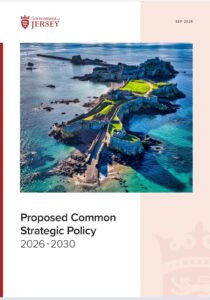
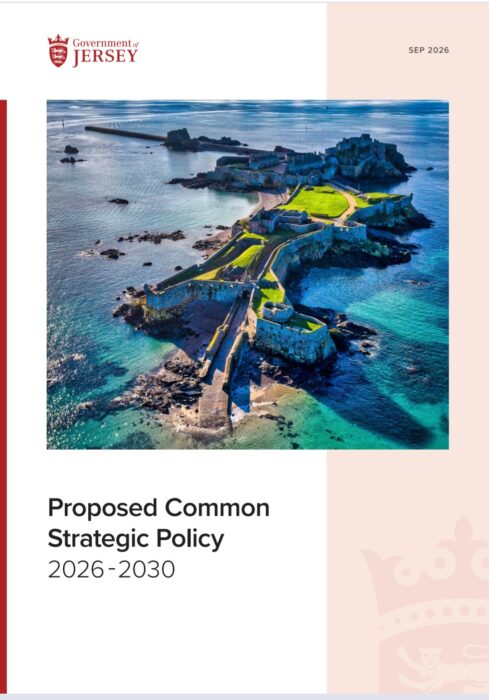
The Common Strategic Policy 2026-2030 and the Budget for 2027-2030 reveal the policy and spending priorities for the Council of Ministers during Chief Minister Lyndon Farnham’s second term.
The CSP contains just one reference to fishing and one to farming, and they are oblique at best.
In Section 9, under the heading “Improve the public realm, community spaces and sports facilities across the whole Island”, we are given the following…
“Deliver practical improvements to Jersey’s countryside, coast and biodiversity through closer partnership with farmers, landowners, fishers and communities.”
That’s it. Countryside is mentioned four times. And rural? Well not at all, unfortunately.
There is the usual commitment to safeguarding “the qualities that make Jersey distinctive: our coast and countryside, our safety, our parish and community life, and our ability to adapt together and communities”.
It seems that farmers are to continue in their centuries-old role as custodians of the countryside, one of the Island’s greatest assets, but with the smallest of leg-ups from Union Street.
And what about the Budget?
Well, there were no surprises. An assurance given in March by the then Treasury Minister, Elaine Millar, in response to a proposition lodged by Deputy Kirsten Morel, was honoured in the Budget. The minister had backed the proposition, which was subsequently agreed unanimously in the House, to continue supporting the marine and rural economies “in perpetuity”. That money will go into the Rural and Marine Support Schemes.
Introducing the 2027 Budget in September, current Treasury Minister Senator Alan Maclean said: “This Budget continues the current level of funding from the Better Business Support package on a recurring basis to Jersey’s rural and marine sectors, in line with the States Assembly decision approved in March 2026. Funding will increase annually by RPI(X), providing long-term certainty for farmers and fishers to invest, improve productivity, and respond to market and cost pressures.”
In numerical terms, that means money available for the two limbs of the economy (as well as for measures to combat Violence Against Women and Girls, which is included in the same pot) will rise from £6,106,000 in 2027 to 9,223,000 in 2030.
The RSS gives out money and credits to farmers and smallholders to promote economic, environmental and social sustainability. Instead of just paying for basic crop or area production, the scheme rewards producers for delivering “public goods” and practising sustainable agriculture.
The MSS aims to achieve similar ends. As well as rewarding positive environmental and social impacts, the scheme provides money to cover rising operating expenses, such as fuel and wages, safety improvements and longer-term investment in equipment upgrades, efficiency improvements and sustainable practices.