It can be learnt as easily in St Ouen as in the Serengeti. By Harry Matthews of Jersey Bushcraft
When people hear the word ‘bushcraft’ or ‘survival skills’ they often picture vast forests, endless tundra, or some distant wilderness where survival is a matter of life and death. Yet bushcraft is not confined to remote places. It is a set of skills, knowledge, and understanding that can be practised wherever nature is found —from a Scottish glen to a hedgerow in Jersey.
At its heart, bushcraft is about learning to live with the land rather than against it. It is the craft of the outdoors, a collection of practical skills that our ancestors relied upon every day. Fire lighting, shelter making, natural navigation, foraging for wild food – all are part of bushcraft. But it goes deeper than technique. It is about observation, respect, and connection with the natural world.
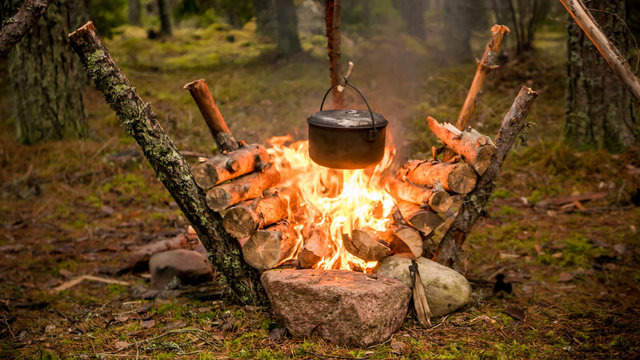
Take fire lighting. In an age of matches and gas lighters, it may seem unnecessary to know how to coax a flame from dry tinder and spark. But once learned, it transforms how you see the landscape. You begin to notice the difference between woods, the feel of bark, the dryness of twigs, the way a flame takes hold. A fire becomes more than heat. It becomes a teacher, a source of confidence and companionship.
Or consider foraging. Few experiences are more rewarding than gathering wild plants and turning them into food. Nettles can be made into soup, dandelion roots roasted into a coffee substitute, blackberries crushed into a preserve. These are not survival tricks reserved for far-off adventures. They are skills that can be practised along a country lane, in a meadow, or on the shoreline. Jersey’s hedgerows and coasts, for example, are rich with edible plants and seaweeds that have sustained local people for generations.
Bushcraft also encourages us to slow down and notice details. A tree shaped by the wind tells of the prevailing weather. Birds moving suddenly may reveal the presence of a fox. The scent of honeysuckle, the call of a blackbird at dusk, the soft crack of a twig underfoot – each sign is part of a greater story being told around us. To study bushcraft is to learn to read that story, and in doing so, to feel more at home outdoors.
Crucially, bushcraft is not about hardship or bravado. It is not a test of endurance. Rather, it is a way of enhancing time spent outdoors, whether on a weekend walk, a family picnic, or a camping trip. A well-set tarp, a cup of wild tea brewed on the fire, or simply the confidence to navigate by the sun and stars can make the difference between enduring an outing and enjoying it.
You do not need to travel to the Arctic or the Amazon to practise bushcraft. The skills are as relevant in the lanes, woods, and shores of Jersey as they are in the remotest wilderness. Wherever you find nature, bushcraft can be learned, shared, and enjoyed. It is about deepening our relationship with the land, carrying forward knowledge that has served humanity for thousands of years, and finding a richer sense of belonging in the natural world.
- Jerseybushcraft.com courses with Simon May and Harry Matthews coming soon