Campaigners who lost a battle to stop 26 homes being built in Victoria Village have urged others to continue the fight against rural over-development.
They say that it is time mindless box-ticking was replaced by common sense and a better understanding of the real-life impact of “inappropriate” schemes.
But they warn that the odds will be stacked against anyone who takes on the planning system – even if they are well-informed, well-resourced and utterly determined.
Villager Sarah Greenwood said: “We’ve all got to show that we still care about the preservation of Jersey’s beautiful rural areas. That is the most important legacy we can pass down to future generations.”
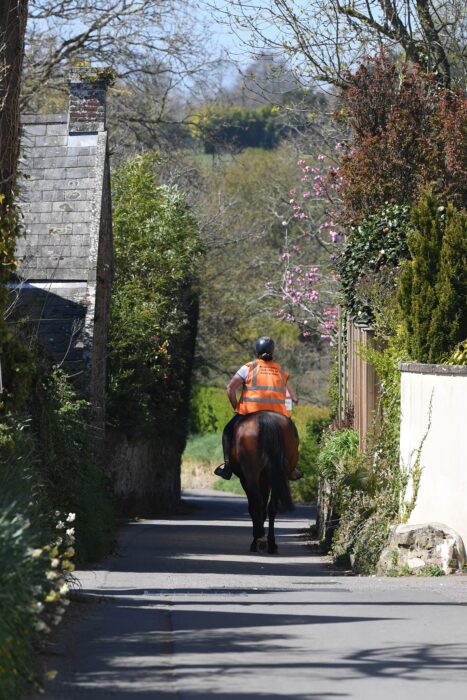
The group argued the proposed estate at La Ruette, Rue du Moulin du Ponterrin, was out of character with its countryside surroundings. They said that the lane to the site, which measures 2.9 metres across in some places, was far too narrow to cope with a significant increase in traffic – or even two-way traffic at all.
They also raised concerns about drains, and now fear that they could be left with months of diversions and delays like those plaguing residents in Sion.
The development was akin to “parachuting an urban density into a rural area”, with houses up to 9.9 metres high, and totally inappropriate, they said.
“If a developer is able to tick all the boxes and submit an application to build 26 homes on a plot like that, something’s wrong,” said Mrs Greenwood. “Even if it meets all the requirements under planning law it doesn’t mean that it’s morally right.” The site is officially categorised as being in a “built-up” area.
She added that residents fully accepted the development of some houses on the site, but said that the proposal was disproportionate in scale.
Another villager, Bob Hassell, said that the drains only just coped as it was, and already overflowed after heavy rain, sending water down La Commune.
“There are significant concerns regarding sewage capacity,” he added.
The original planning application for La Ruette proposed 32 homes, some three floors high, but that was subsequently reduced to 26 following consultation. An application for 26 homes was refused by the former Planning Committee in April. Their decision was challenged by the applicant, Castletree Eco Village Limited, and the case was reviewed by independent planning inspector Fortune Gumbo.
Minister for Planning and Regulation Senator Mark Boleat agreed with the planning inspector and granted the appeal in favour of the developers. They want to partially demolish the existing house and build on the rest of the site, which includes a large garden and parking area.
Mr Hassell, whose house is across the lane from La Ruette, said that villagers were astonished that neither the planning officer, the planning inspector nor the minister could see why the road was far too narrow. The group said that it defied common sense to put a large estate on such a tiny rural road.
Mr Hassell’s advice to others faced with a similar situation was clear. “Get organised, work together rather than against each other, and be prepared to do a lot of homework, including involving professionals, who can talk and argue at the same level as these people, because we’re not able to do that. Anything we said, the minute we used the wrong term, they were able to derail our argument.”
Fellow villager Trevor Prouse added: “People shouldn’t stop trying just because we lost this time.
“It’s amazing how strong a group can be when they include all sorts of different characters and capabilities. When people come together it can create a powerful force.”
He added that one only had to look at the density of the cluster of properties neighbouring the development site to appreciate just how inappropriate the development was.
The villagers commissioned their own independent traffic report, which concluded that the road was totally unsuitable for a significant increase in vehicles.
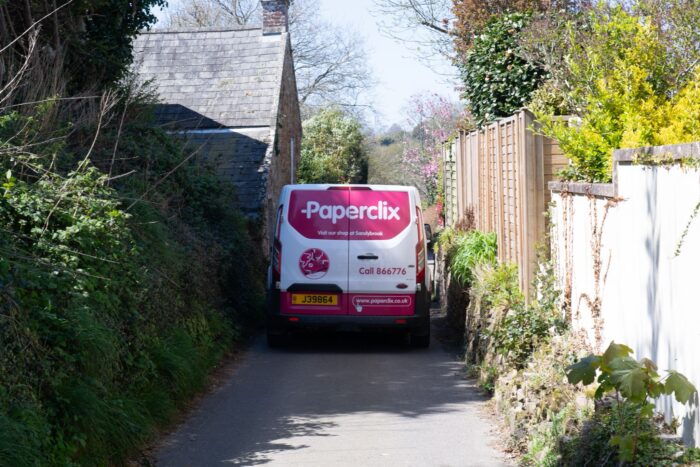
Kate Jones said that their concern was not just about the lorries and other constuction traffic that would use the lane during the construction phase, but the ongoing flow when people moved in.
“If you’ve got a tiny country lane and you’ve got to start putting pavements, yellow lines, traffic management measures in place, surely that shows that the area simply can’t cope with it,” said Mrs Greenwood.
They say that they had the resources to put up the fight they did, but worry for people unable to commission reports, undertake extensive research or who do not have the time to fully understand the planning process.
The campaigners say they raised around £12,000 to pay for legal and technical experts.
Their only option now would be to take the matter to the Royal Court if they can find a reason why the matter had been handled contrary to the law.
“The enormous risk is that if we did take it to the Royal Court and lost, potentially we’d have to pay the other party’s costs,” said Mrs Jones.
The group added that their experience showed the need for a robust third-party appeal process.
A report written by Senator Boleat and Alan Merry for the Policy Centre Jersey, before the former was in the States Assembly, said that the appeals process was too restrictive.
The report included recommendations that appeals should be lodged within seven days of a decision as opposed to 28, and that the distance from the development site within which neighbours have standing to appeal should be reduced from 50 metres to 30 metres. The authors also said that consideration should be given to abolishing third-party appeals if confidence in the system improves.
Mrs Jones added: “You could have a decision made that has so much impact on so many people, and yet potentially there’s no right of appeal or questioning whatsoever? How can that be right?”