
By would-be Jersey’s comissar for education, Alasdair Crosby
In the Spring edition of RURAL magazine, we have had a special theme of educating young people about the countryside. So, the question posed in the title is an appropriate one to ask.
One of the important things about a countryside education is that it should not just be ‘an add-on’ to schoolwork, like a school chess club or drama club, but be an integral part of a child’s or young adult’s schooling.
There are several unarguable aspects to a good education on which everyone could agree. It should not be entirely about the accumulation of academic facts, for example, or be just an exam factory, or be all about I.T and squatting over a computer immersed in the virtual reality of the on-line world. Nor should it be about how to use AI to do one’s thinking for one – that miserific vison is the polar opposite to what real education should be about.
For several centuries, a university education provided further learning for the cream of academically gifted school leavers. More recently, it has become almost expected that the vast majority of school-leavers should attend some sort of college of further education. After two or three years at Beste-Le-Hole University (formerly Technical College), they leave with a degree and find that their qualification has not enabled them to find the job that they had once expected to find with relative ease. And, if they are UK citizens, they are also saddled with considerable debts that will take decades to repay.
Might there be a better way to educate the young and to equip them for a useful and satisfying adult life?
In my ideal world, young children would be helped to understand reading books, writing and arithmetic. Stories of young children swiping at a book as if it were a phone screen, because they don’t know how to turn a page, the appalling ignorance of spelling and grammar that one seems to find in many official or public communications (‘Oh, we did spell-check it before releasing the communication’), and shop assistants reaching for a calculator to work out the price of 5 items at £2 each, would become part of the horror story of ‘the bad old days’ before Crosby became the Commissar for Education.
Those children whose aptitude for academic success and facility for passing exams has been spotted could always proceed up the educational ladder, just as they do at present. We will always continue to need doctors, teachers, engineers, architects and similar professionals.
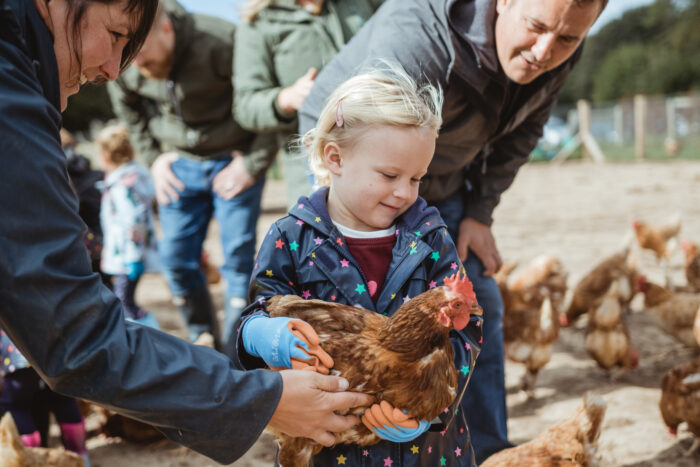
But, for all ability levels, Commissar Crosby would dictate that education was based on handicrafts, the arts, and agriculture. The aim of this would be that every child should leave school with some working knowledge of all the crafts that are worth practising, and of agriculture and stockmanship, but also with a very good knowledge of one particular craft.
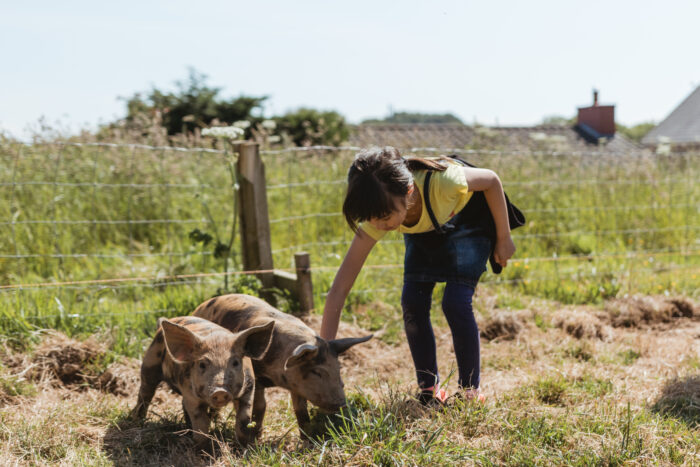
Thus the system would turn out educated craftsmen and craftswomen, young adults who could produce their own family’s food from their own holdings, if need be, and far less regularly have to rely on purchases from the shops.
At the same time, such a smallholder society would be largely composed of members who could turn their hand to one skilled craft, to produce superbly some article that their neighbours wanted.
The other stream of education would be the making of art, teaching children to sing, to play instruments, to make instruments, to paint, to weave to pot, to sculpt, to carve, to make up songs, to compose poetry. All these activities make for happiness, for people well integrated in their local society and for true culture as opposed to imposed culture.
Would not this be better than to than producing young adults, their heads stuffed with facts and figures, their fingers skilled at nothing but pressing buttons, or slaves to notions of wealth produced by the chimera of screens full of flashing figures, and totally divorced from the earth, that profound source of natural wealth, health and happiness?
For a small community like Jersey, such an alternative education would benefit both the Island and young people, and the local economy.
Oh well, I am most unlikely ever to be made a Commissar of Education, so everyone can breathe sigh of relief and carry on using their phones.
One Response
Thank you very much for this article.
You should be Commissar of Education as this is my idea of an education too. To turn a child into an all round educated adult.
It’s what the world needs.
I wish, if only…