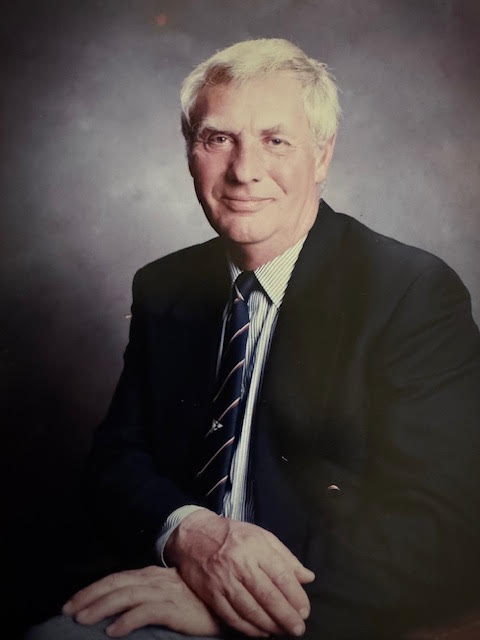
LAWRENCE CARTER, who has died aged 88, was a former president of the Jersey Farmers Union, who had a great love of the sea and for fishing.
His presidency of the JFU from 1990 to 1992 was at a time when Government support for farming was decreasing. The industry was also concerned that too much agricultural land was being earmarked for building development. These two issues were prominent during his term of office.
Previously, he had been chairman of the JFU Cauliflower Committee, and if, from a modern perspective, the question might arise: ‘What does a cauliflower committee actually do?’ it should be remembered that in the late 1980s, 7,000 vergées of cauliflowers were grown in the Island, making it an important export crop.
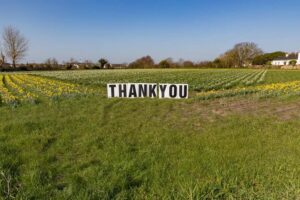
Following his marriage in 1960, he and his wife, Jennifer (Jenny), bought a home in his home parish of St Lawrence, Hampton Villa, which would be their home for the rest of their lives. Although he had no real experience of farming, they set up a poultry farm for egg production. He built three chicken houses holding 5,000 birds, learned to drive a tractor to plough and cultivate, and grew Jersey Royals, cauliflowers and daffodils, trading as St Lawrence Growers.
Mr Carter also played his part in Parish and Island life, doing a stint as a Constable’s Officer for St Lawrence, and he also sat on the Jersey Lottery board.
But it was the sea and fishing that always played an important part in his life, from childhood days when he would go out with fishermen from Bonne Nuit Bay. He was a founder member of the Bonne Nuit Boat Owners’ Association, of which he was secretary and then Skipper, a tradition since maintained by his family.
He was also a founder member of Friends of Bonne Nuit and the Inshore Fishermen’s Association, and one of the four instigators of the annual Sark to Jersey Rowing Race. The idea was conceived over the course of a Sunday lunch at Les Fontaines Tavern with friends Mike Hamelin, Basil Le Brun and Gerald Palmer, who were all fellow members of the Bonne Nuit Boat Owners’ Association.
They looked across the sea to Sark, and agreed that if Chay Blyth and John Ridgeway could row the Atlantic, it must be possible to row between Jersey and Sark. In July 1967 a variety of boats and rowers proved that it was very possible, with the first crew finishing in just under five hours. Today it is still one of the great sporting challenges in the Channel and has been called the Blue Riband rowing event of the Channel Islands. It has been held every year since then.
Mr Carter was always a passionate fisherman; boating and fishing was always an important part of his life. He helped to build a hut on Les Ecréhous for his uncle, Bill Sarre; visits to Les Ecréhous with Jenny remained always a much-cherished part of family life.
At his funeral in a very full St Lawrence Parish Church, a notice was displayed on the side of the coffin: ‘Gone Fishing’.
Lawrence Dudley Carter was born in 1938 at Millbrook Nursing home, the son of Harold Carter, a schoolteacher. and his Doris (née Sarre). For the first years of his life he lived with his two sisters, Barbara and Nancy, in the family home, Windycroft, off Mont Félard that Harold Carter had built.
However, the German Occupation meant the family had to vacate their home and move to a house just across the road from St Lawrence Church, where they lived until Liberation in 1945. He attended St Lawrence School where his father had become the headmaster, and then went on to Victoria College.
At the age of 16 he left school to join Warsash Maritime Academy in Southampton (now part of Solent University), where he undertook an officer training course for the Merchant Navy. Subsequently he joined Port Lines as an officer cadet and spent the next three years travelling the world on cargo ships, shipping lamb from New Zealand, bananas from Australia and iron ore from South Africa.
On his return to Jersey, he had no real idea of what he wanted to do. Initially he worked at Springside Poultry Farm, which was owned by the Le Marquand family, who were family friends. This gave him the idea of becoming a farmer.
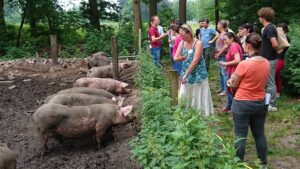
In the 1970s and 1980s, his farming business expanded, with greenhouses to grow tomatoes and polytunnels for producing cauliflower seed. The farm was further expanded in the 1970s and 1980s from 40 vergées to 350 vergées. Although he retired from farming in 2002, he still kept a keen interest in the management of the neighbouring Bienvenue Farm, built together with his son, Steven, whose home it was.
During his long retirement he continued to enjoy fishing, and going on boating trips to Les Ecréhous, Sark, Guernsey, Carteret and Britanny, with Jenny. They loved travelling, and often visited their son, Richard, and his family in Australia and also travelled to The Far East, New Zealand and on many other trips and cruises.
His was a unique and sociable character, with a great sense of humour and also a practical joker; he could always be relied upon to come up with a joke on April Fools’ Day. His wide circle of friends included fellow members of the St Helier Yacht Club, and the boating and farming community, and his neighbours in the parish.
Mr Carter was pre-deceased by his wife, Jennifer (Jenny), née Gross. He is survived by his children Steven, Philip and Richard and their families, to whom the JEP extends its sympathy.
(Obituary first appeared in the Jersey Evening Post)